As well as a static storyboard, we created an animatic version. Where the above version made us think about camera angles, we could now look at how we could edit our film and which features would be useful. For example, using a black and white filter and a flash transition helped emphasise the flashback, and we could superimpose different shots over the master shot in the introduction which we really liked. It also gave us the opportunity to test out our music and sound effects.
Thursday, 12 November 2015
Storyboard
We used our script as the basis for a storyboard for our film, and brainstormed different camera angles we could use in each scene. It also meant we had to carefully consider locations in detail, helping us be practical when we developed our ideas as this was one of the biggest problems we faced making our AS Level film. We eventually created this storyboard.
As well as a static storyboard, we created an animatic version. Where the above version made us think about camera angles, we could now look at how we could edit our film and which features would be useful. For example, using a black and white filter and a flash transition helped emphasise the flashback, and we could superimpose different shots over the master shot in the introduction which we really liked. It also gave us the opportunity to test out our music and sound effects.
As well as a static storyboard, we created an animatic version. Where the above version made us think about camera angles, we could now look at how we could edit our film and which features would be useful. For example, using a black and white filter and a flash transition helped emphasise the flashback, and we could superimpose different shots over the master shot in the introduction which we really liked. It also gave us the opportunity to test out our music and sound effects.

Wednesday, 4 November 2015
Script and Actors
Our next step was to create the script for our film. We began by creating the three main characters:
After creating a rough draft of the script, we wanted to record a read through with our actors to see if it ran smoothly and to get any feedback on what we could do to improve the narrative.
- Kevin
- How he fits into film noir: Kevin is the "fall guy", as our film documents his downwards spiral. His biggest flaw is his dark history and mentality (like with many film noir heroes)- he suffers from PTSD and dissociative amnesia, which drive him to murder. There is definitely ambiguity to his character- obviously he is a killer, however because he doesn't know this he acts innocent. The audience could sympathise with him although not fully. He allows himself to be manipulated by the femme fatale.
- Violet
- How she fits into film noir: Violet is the "femme fatale" in our film. She is everything Kevin is not; independent, confident, seductive, lacking compassion and career orientated. This makes it easy for her to manipulate him for her own gain; she feels no guilt despite their months together and escapes unscathed. She is nothing like the traditional woman (a domestic housewife) and like the femme fatales in early noirs defies gender roles. We have taken inspiration from characters such as Phyllis Dietrichson in Double Indemnity, an archetypical femme fatale.
- Policeman
- How he fits into film noir: In many film noirs the police are actually shown as corrupt and immoral (for example in LA Confidential), so we have actually subverted this convention. We wanted one character who was clearly good and moral to act as a foil and remind the audience of how terrible the actions of the other characters are. He sees the femme fatale for what she really is and although he is glad to have found the killer he is clearly uncomfortable with how she caught him.
After creating a rough draft of the script, we wanted to record a read through with our actors to see if it ran smoothly and to get any feedback on what we could do to improve the narrative.
The two main issues were:
1. Kevin and Violet's relationship seemed to move forwards very quickly
We planned to show this though a montage, using no dialogue, so maybe the script didn't make this clear enough. When we film we could perhaps use different costumes and filters to make it clear that a significant period of time has passed, for example from a sunny day to a colder, rainy one. Even a caption could be used to make this explicit.
2. Violet's monologue didn't quite explain how Kevin had committed the murders and needed developing
We will need to adapt our script to make this clear, so perhaps Violet's monologue should be extended slightly. We could name the condition and she could give a definition so the audience can see where it all fits in.
We considered this feedback before creating our final version of the script.
Final Script
Tuesday, 3 November 2015
Title

We decided on the title "Blackout" for our film, a direct reference to the protagonist's periods of memory loss, which we make clear when Violet finds Kevin's medical records. It could also be interpreted as a synonym for death, which fits in with some of the darker themes and ideas in our film.
Typography
We knew that we wanted to use a white font on a black background. The dark background is conventionally used in title cards to draw attention to the text, and in classical cinema when there was no Technicolor white was the only colour which clearly stood out. Therefore the title card will be reminiscent of the iconography of traditional film noirs filmed in the 1940's and 1950's. This was important to us because we are filming a neo noir which actually subverts many of the conventions of these films.
 |
| Title cards of classic film noirs |
We began by looking at the fonts on Final Cut Pro X. Although we would have more choice on custom font sites, we would have had to export the title card as an image which would have been of a lower quality and harder to animate. We found three fonts that we liked

What we liked
|
What we didn't like
|
Simple and bold font makes it stand out
|
Possibly overly simple, looks too boring
|
Sans serif with no embellishments means the audience won’t struggle to read it
|
Nothing which directly links it to film noir or the film itself- very generic
|
The subtle reflection makes it a bit more sophisticated
|

What we liked
|
What we didn't like
|
Very clear, large lettering
|
From a distance it still looks too simple and boring
|
The font does not just use solid blocks of colour but markings which look like scratches to give it texture
|
The markings, which make it look rough and damaged are possibly more reminiscent of an action film than a film noir
|
Our Final Font

What we liked
|
What we didn't like
|
The typography is retro and reminiscent of old film posters, such as classic film noirs.
|
It doesn't contrast with the background as much as the first fonts, so we would have to make it as big and bold as possible.
|
It is still fairly simple and bold, even if it is not white, so it stays legible.
| |
Close up, there is a shadowed pattern which makes it more interesting. The combination of black and white is again associated with film noir specifically.
|
Sunday, 1 November 2015
Mind Map of Initial Ideas
Having studied the history and conventions of film noir, we feel we are ready to begin planning our own film. We tried to come up with three different ideas and developing a premise for each using stereotypical characters, themes and ideas. We eventually combined different elements of each of them to create our final premise:
A war veteran suffering from dissociative amnesia finds himself at the psychiatrist's coinciding with a string of local murders. He meets a young undercover journalist who has her own career at heart- and sees the opportunity for a breakthrough.
From this we were able to discuss initial ideas for the setting, characters, props, costume and makeup.
Friday, 30 October 2015
Is Film Noir a Genre?
Genre is the French word for type, and can be used to categorise most media texts. A genre is established when a number of films all share clear codes and conventions, creating a new style. The advantage of this is that different audiences will have different favourite genres, so each group can be targeted (for example women will stereotypically watch romantic comedies). If the codes and conventions are followed then the director can confidently create a piece that they know the audience will enjoy. The audience is satisfied because when a certain genre is promoted to them, they know what they are buying into and are assured they will enjoy it.
There is much debate among film students as to whether film noir is a genre or a style.
Thursday, 29 October 2015
Brick Analysis
Brick (2005 Film) Analysis from jessfareymedia
The song "Emily's Theme" mentioned in slide 13 can be found on Youtube if you click here.
The song "Emily's Theme" mentioned in slide 13 can be found on Youtube if you click here.
Wednesday, 28 October 2015
Gone Girl Analysis
Although most film critics catergorise Gone Girl (2014) as a crime film or psychological thriller, when I recently watched it myself I actually identified some of the key conventions of a film noir within it, which I have outlined below. For these reasons I believe Gone Girl could be considered a neo-noir.


Wednesday, 30 September 2015
Interviews
As well as distributing a survey (which although would cover a larger geographical area/ social group), we conducted two in depth interviews at school with our target audience, which were open ended to ensure that we weren't getting any "best fit" answers (and creating invalid results) and to check they understood the different questions and terminology.
Tuesday, 22 September 2015
Saturday, 19 September 2015
Narrative Theories
A narrative is how a story is told in fiction and non-fiction media texts.
Propp
Propp was a Russian theorist who analysed fairy-tales in the 1920's and found conventions in the types of characters that appeared in the stories. These can be applied to most media texts today. His 7 character types are:
- Hero (seeks something, saves the day)
- Villain (opposes hero)
- Princess/ Treasure ("reward", seeks protection)
- Donor (helps by providing the hero with something, perhaps a magical object)
- Dispatcher (sends hero on his way)
- Helper (gives support to hero)
- False Hero (falsely assumes the role of a hero)
These can be applied to films such as Harry Potter, and films noirs such as Double Indemnity.
 |
| The donor in Harry Potter |
In the Harry Potter films, Harry is the hero. The villain throughout these is Lord Voldemort. The princess is Ginny, his love interest and whom he repeatedly risks himself to save. The Donor is Hagrid, who tells him he is a wizard and equips him for the magical world. The dispatcher is Dumbledore, who sends him off to find the Horcruxes. The helpers are Ron and Hermione who support him throughout the films. The false heroes could be Gilderoy Lockheart who lies to everyone about his adventures or Peter Pettigrew who poses as a family friend.
 |
| Walter, the anti-Hero in Double Indemnity |
In Double Indemnity, the Hero (although not a conventional one) is Walter. The villain is initially thought to be Mr Dietrichson but revealed to be Phyllis (also the false hero). The princess could be Phyllis (who claims she needs saving from Mr Dietrichson) or Lola, who is genuinely put at risk from Phyllis' actions. Barton Keyes gives Phyllis the case of the Dietrichson family and sends them to his house, making him the donor and dispatcher. Lola could be the helper because she helps Walter see the wrong in his murderous actions.
Todorov
Todorov developed a theory on the order and structure of narratives. He argued that every narrative, regardless of the form, began with an equilibrium, where life is "normal" and happy. There is then a disruption of some kind, throwing the narrative into disequilibrium (chaos). A resolution is eventually reached and there is a state of new equilibrium, the "new normal".
This can be applied to a majority of media texts, not just films. Again using the Harry Potter series as an example (specifically Harry Potter and the Goblet of Fire);
1. Harry returns to another year at Hogwarts School.
2. He is unknowingly entered into the Triwizard Tournament, throwing away his chances of a "normal" year.
3. He is faced with three dangerous tasks, nearly killing him, throughout the year, ending face to face with his nemesis, Lord Voldemort.
4. He successfully battles Lord Voldemort, escapes with the Triwizard Cup and is named the victor.
5. He resumes his studies at Hogwarts until the year ends, with the knowledge that Voldemort is still alive.
 |
| Battling Voldemort in the Goblet of Fire |
This also works using the plot of the French Noir, À Bout de Soufflé (Breathless).
1. Michel is a young man intrigued by crime (specifically the screen persona of Humphrey Bogart).
2. He inexplicably shoots and kills a policeman who followed his stolen car.
3. He turns to Patricia, with whom he hides from the police in Paris whilst planning an escape to Italy.
4. Patricia finds out about his past and turns him in.
5. Justice is served as the police find and shoot Michel.
 |
| Patricia helps hide Michel in À Bout de Soufflé |
Barthes
Roland Barthes was a semiologist who looked at the meanings people gave to "signs" in films. He was the first person to use the terms denotation (what you see) and connotation (what you may infer from what you see). He argued that the combination of five codes and their functions was what made the audience able to communicate with the text in a meaningful way. These five codes were:
- Proairetic code (action code), any action initiated must be completed and gives meaning to the text
- Hermeneutic code, the code of enigma and puzzles to be solved
- Connotative/ Semic code, the accumulation of connotations which form character (e.g. through their actions, speech and thoughts)
- Cultural code, the knowledge we use in interpreting everyday experience
- Symbolic code, binary oppositions and themes
Levi Strauss
Theorised that the world was split into binary oppositions, or contrasting ideas and themes. The main purpose of this is that something can only be defined in relation to what it isn't- so a hero can only be a hero if there is a cowardly option to take. Examples of binary oppositions include:
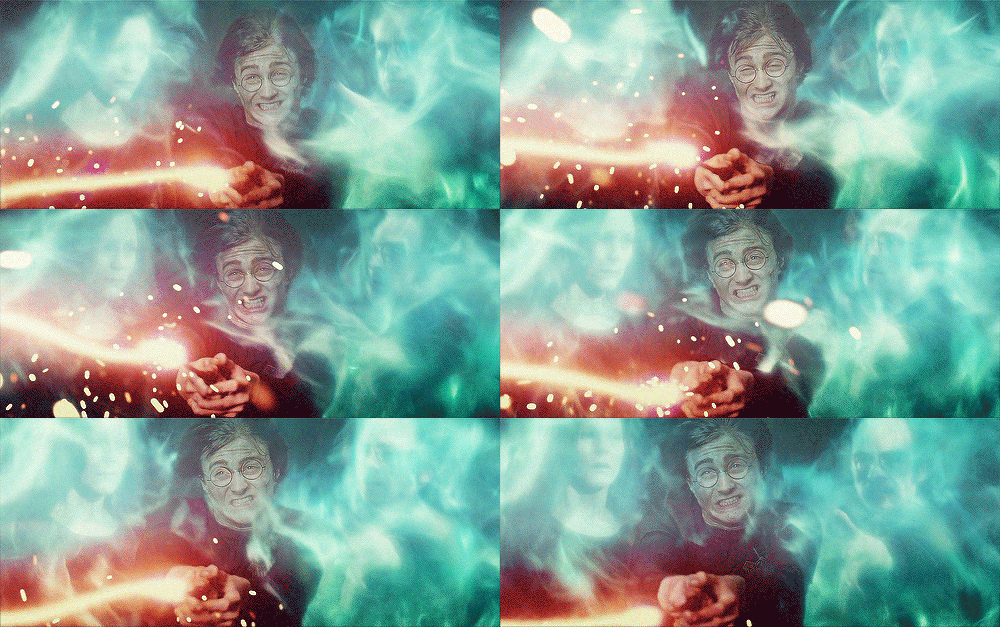 |
| Magic in Harry Potter |
- Good and evil
- The magic and the profane
- Friendship/ loyalty and betrayal
- Childhood and adulthood
(In the Harry Potter films)
 |
| Justice is eventually served in LA Confidential |
- Justice and injustice
- Corruption and innocence
- Urban and rural
- Life and death
- Moral and immoral
(In LA Confidential)
Friday, 18 September 2015
Monday, 31 August 2015

Thursday, 27 August 2015
Tuesday, 25 August 2015
Thursday, 16 July 2015
Representation Preliminary Task
We were given the task to use our knowledge of camera and editing skills to present the school in two different perspectives; positively and negatively. This will help our narrative skills when we come to create our own film noir.
To show our school in a positive light we filmed a lot of scenes outside as it was a sunny day. We highlighted the fun students had in extracurricular areas such as sports and music as well as joking around with each other in the study rooms. We also focused on the newer areas of school such as the sixth form block. When it came to editing, I used quicker shots and cuts, upbeat music and bright filters.
On the other hand, when we created our negative film, we chose empty corridors in lesson time, the old, more run down buildings and empty classrooms. We asked our friends to act in a more upset manner. When I edited this footage, I put over lots of darker filters so the lighting appeared low key and shadowy as well as a rainy special effect, which made the outdoor scenes appear more gloomy. The cuts and shots are much slower and I added melancholy piano music over the top which changed the mood completely.
This is the final film.
Wednesday, 15 July 2015
Film Recreation Preliminary Task
We were given the task to recreate any scene from a film of our choice, using the same camera shots, script and editing techniques. We chose the following scene from the film "10 Things I Hate About You".
Our first task was to find the original transcript for the film to give to our actors, which was available on the internet in the public domain.
Our first task was to find the original transcript for the film to give to our actors, which was available on the internet in the public domain.
 Michael leads Cameron down a set of concrete steps to a secret gathering
          of dating candidates for Kat.

                              MICHAEL
                    Now, I have gathered a group of guys.  Couldn’t be more
                    perfect.  Padua’s finest.

          They enter a dank room, wherein waits a very motly crew of the most
          unlikely specimens one would expect.  Cameron shoots Michael an
          unsatisfied grimace.

                              CAMERON
                    Hi.  How ya doin’?  Would any of you be interested
                    in dating Katarina Stratford?

          What follows is a truncated interview process, where each candidate
          in turn sits in the interview chair and gives his response.

                              CANDIDATE 1
                    (laughs hysterically)

                              CANDIDATE 2
                    (stares blankly)

                              CANDIDATE 3
                    No, I’ve never been that ripped.

                              CANDIDATE 4
                    Maybe if we were the last 2 people alive, and
                    there were no sheep... Are there sheep?
We then made a note of which lines were used in which shot, and the order they went in before we were ready to film. We had the original scene on our phones as we filmed so we could try and position them in the same way (or as close to this as we could achieve in a school setting). Below are the side-by-side examples of how we tried to recreate each shot.


Then we copied our film to the computers and used Final Cut Pro X to edit them. The cuts were all straightforward and there were no obvious special effects. After cropping and ordering the clips, we simply had to lay sound over the top. We looked up the film soundtrack to find the song and added that over the top as well as the digetic noises such as the school bell and scream at the end, which the microphone did not pick up. We found both these sounds on copyright free websites.


Then we copied our film to the computers and used Final Cut Pro X to edit them. The cuts were all straightforward and there were no obvious special effects. After cropping and ordering the clips, we simply had to lay sound over the top. We looked up the film soundtrack to find the song and added that over the top as well as the digetic noises such as the school bell and scream at the end, which the microphone did not pick up. We found both these sounds on copyright free websites.
Overall, the two pieces match fairly well. Some of the dialogue is fairly hard to pick up at the start, because we did not have access to a microphone when we were filming; for our film noir we would obviously have to find a boom mic for better quality audio. There is also a continuity as one of of actors was wearing a hat in the first shot and was not in the second; this was something we only noticed in the editing process and could not work around in order to remain faithful to the scene. When we make our film noir we will have to be stricter with our actors and more specific with our costumes to create a stronger sense of character. As we had to film in lesson time we were obviously restricted with the number of actors, so two of them had to play multiple parts, however this would not be an issue when we make our own film. To conclude I am pleased with the similarities between the two scenes, especially how the soundtrack compliments our scene and makes it much more like the original.
Thursday, 9 July 2015
Subscribe to:
Posts (Atom)