Propp
Propp was a Russian theorist who analysed fairy-tales in the 1920's and found conventions in the types of characters that appeared in the stories. These can be applied to most media texts today. His 7 character types are:
- Hero (seeks something, saves the day)
- Villain (opposes hero)
- Princess/ Treasure ("reward", seeks protection)
- Donor (helps by providing the hero with something, perhaps a magical object)
- Dispatcher (sends hero on his way)
- Helper (gives support to hero)
- False Hero (falsely assumes the role of a hero)
These can be applied to films such as Harry Potter, and films noirs such as Double Indemnity.
 |
| The donor in Harry Potter |
In the Harry Potter films, Harry is the hero. The villain throughout these is Lord Voldemort. The princess is Ginny, his love interest and whom he repeatedly risks himself to save. The Donor is Hagrid, who tells him he is a wizard and equips him for the magical world. The dispatcher is Dumbledore, who sends him off to find the Horcruxes. The helpers are Ron and Hermione who support him throughout the films. The false heroes could be Gilderoy Lockheart who lies to everyone about his adventures or Peter Pettigrew who poses as a family friend.
 |
| Walter, the anti-Hero in Double Indemnity |
In Double Indemnity, the Hero (although not a conventional one) is Walter. The villain is initially thought to be Mr Dietrichson but revealed to be Phyllis (also the false hero). The princess could be Phyllis (who claims she needs saving from Mr Dietrichson) or Lola, who is genuinely put at risk from Phyllis' actions. Barton Keyes gives Phyllis the case of the Dietrichson family and sends them to his house, making him the donor and dispatcher. Lola could be the helper because she helps Walter see the wrong in his murderous actions.
Todorov
Todorov developed a theory on the order and structure of narratives. He argued that every narrative, regardless of the form, began with an equilibrium, where life is "normal" and happy. There is then a disruption of some kind, throwing the narrative into disequilibrium (chaos). A resolution is eventually reached and there is a state of new equilibrium, the "new normal".
This can be applied to a majority of media texts, not just films. Again using the Harry Potter series as an example (specifically Harry Potter and the Goblet of Fire);
1. Harry returns to another year at Hogwarts School.
2. He is unknowingly entered into the Triwizard Tournament, throwing away his chances of a "normal" year.
3. He is faced with three dangerous tasks, nearly killing him, throughout the year, ending face to face with his nemesis, Lord Voldemort.
4. He successfully battles Lord Voldemort, escapes with the Triwizard Cup and is named the victor.
5. He resumes his studies at Hogwarts until the year ends, with the knowledge that Voldemort is still alive.
 |
| Battling Voldemort in the Goblet of Fire |
This also works using the plot of the French Noir, À Bout de Soufflé (Breathless).
1. Michel is a young man intrigued by crime (specifically the screen persona of Humphrey Bogart).
2. He inexplicably shoots and kills a policeman who followed his stolen car.
3. He turns to Patricia, with whom he hides from the police in Paris whilst planning an escape to Italy.
4. Patricia finds out about his past and turns him in.
5. Justice is served as the police find and shoot Michel.
 |
| Patricia helps hide Michel in À Bout de Soufflé |
Barthes
Roland Barthes was a semiologist who looked at the meanings people gave to "signs" in films. He was the first person to use the terms denotation (what you see) and connotation (what you may infer from what you see). He argued that the combination of five codes and their functions was what made the audience able to communicate with the text in a meaningful way. These five codes were:
- Proairetic code (action code), any action initiated must be completed and gives meaning to the text
- Hermeneutic code, the code of enigma and puzzles to be solved
- Connotative/ Semic code, the accumulation of connotations which form character (e.g. through their actions, speech and thoughts)
- Cultural code, the knowledge we use in interpreting everyday experience
- Symbolic code, binary oppositions and themes
Levi Strauss
Theorised that the world was split into binary oppositions, or contrasting ideas and themes. The main purpose of this is that something can only be defined in relation to what it isn't- so a hero can only be a hero if there is a cowardly option to take. Examples of binary oppositions include:
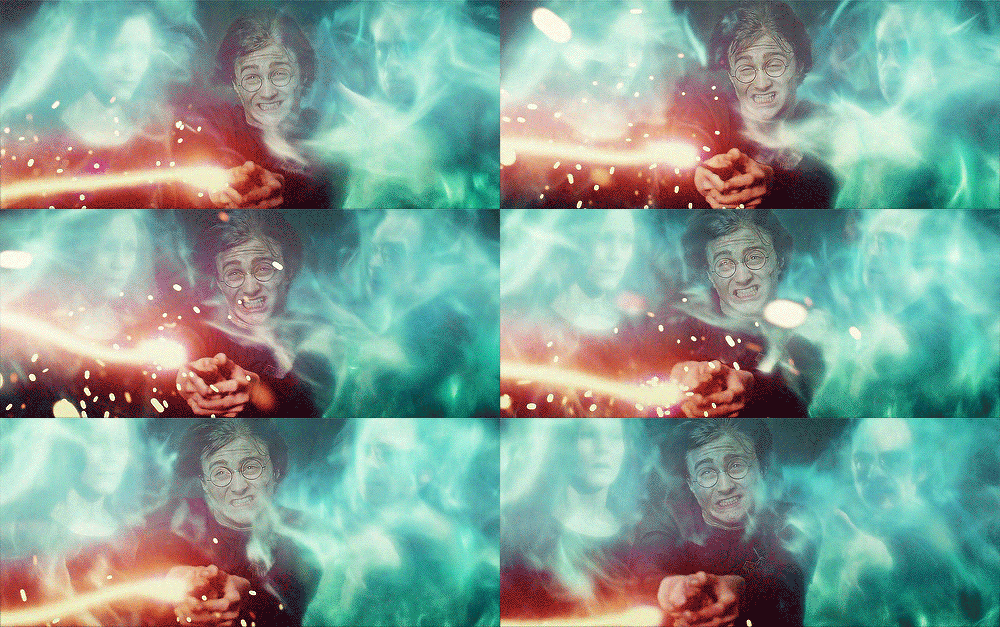 |
| Magic in Harry Potter |
- Good and evil
- The magic and the profane
- Friendship/ loyalty and betrayal
- Childhood and adulthood
(In the Harry Potter films)
 |
| Justice is eventually served in LA Confidential |
- Justice and injustice
- Corruption and innocence
- Urban and rural
- Life and death
- Moral and immoral
(In LA Confidential)

No comments:
Post a Comment